Izapa Temple Reconstruction

2:13 pm


Below is a model of the Izapa Temple Center, So. Mexico built by V. Garth Norman author of Izapa Sculpture Text/Album (New World Archaeological Foundation 1976) and Izapa Archaeoastronomy (1980).

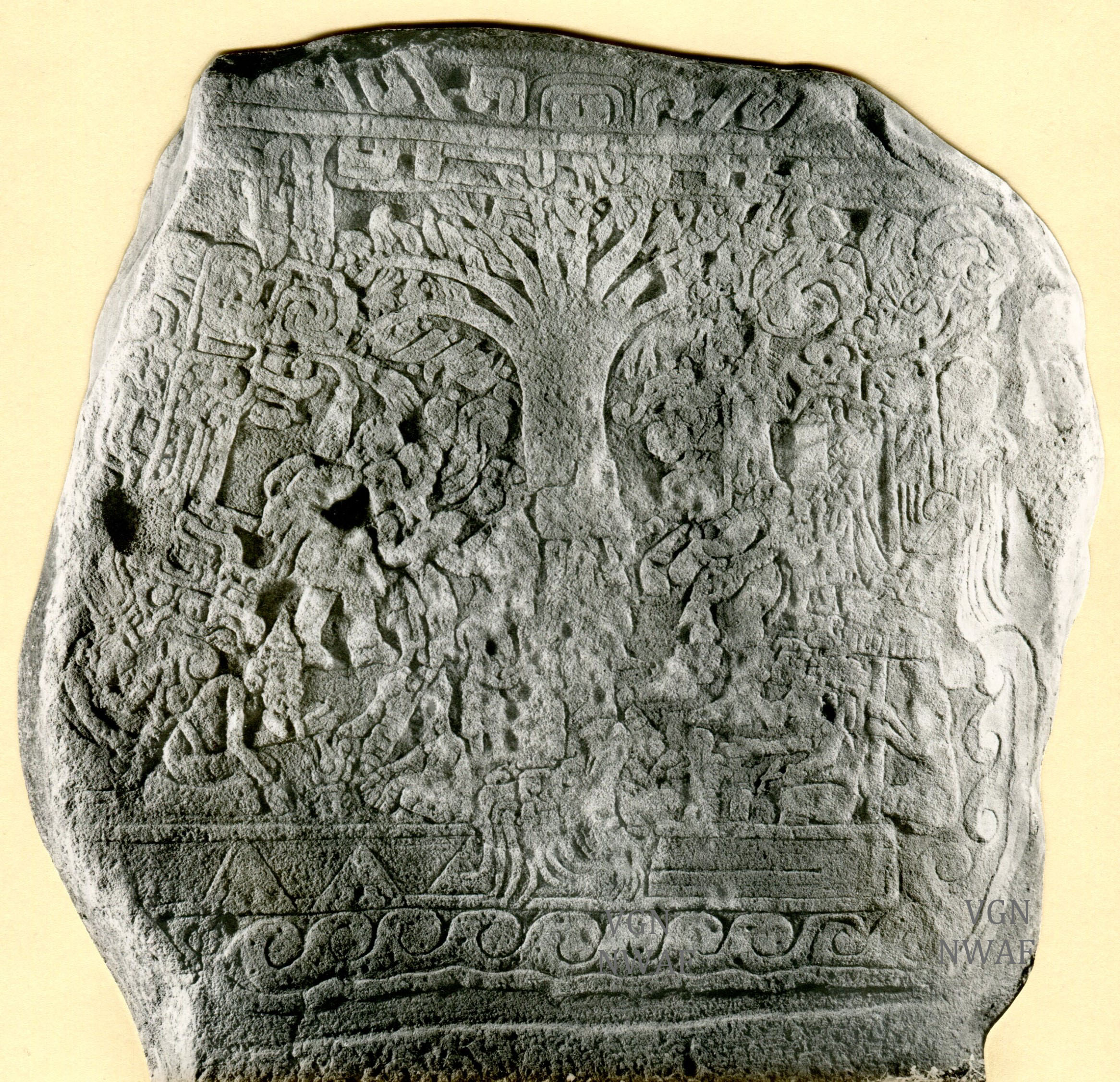
The ancient Temple Center of Izapa, Mexico comprised of small pyramids and grassy plazas the size of football fields is located on the Pacific Coast of Southern Chiapas, Mexico on the Tapachula-Talisman Highway border of Guatemala. Izapa is acclaimed for its many stone monuments mostly carved in a distinctive low relief narrative style expressing cosmological, religious and historic themes. The Izapan cultural period of Mesoamerican civilization developed in the wake of a hiatus of Olmec civilization around 500 B.C. and flourished to about 100 A.D. Izapan culture evolved into or influenced virtually all of the rising ancient Classic Mesoamerican cultures.

Click to view Introduction to Calendar-Astronomy at Izapa pdf: izapa-pp-for-web

Some Izapa Temple Center discoveries:

  • Central northern axis of the Temple Center aligns to the Tacana volcano.
  • Stelae are aligned astronomically with Sun, Moon and Venus cycle rises on the eastern mountains for June21/December 21 Solstices and September 20/March 21 Equinoxes.
  • Base Date of the Mayan Creation is in the 260/105 Day Sacred Calendar.
  • Maya Long Count Calendar at Izapa has a continuous running day count from creation of 3114 B.C.
  • Mesoamerican 52 year Calendar Round substantiated at Izapa.
  • Ancient Geometry and Measurement systems are on stone carvings and in the Temple Center planning and positioning of Mounds.
  • There are 33+ man-made mound-pyramids.
  • There are 90+ stone stelae with pictographic-heiroglyphic low relief carvings–35+ altars and monuments.
  • Annual calendar cycle (spring, summer, autumn, winter) compares to the human life cycle on the monuments, expressing man’s creation origin, mortal road of life and immortal destiny.
  • Some of the extraordinary sculptured monuments display elements and characters from the Popol Vuh, sacred book of the Quiche Maya of Guatemala.

Izapa Sculpture/Text & Album by V. Garth Norman, New World Archaeological Foundation #30, 1976.

Click on the books below to view a digitized copy.

NWAF Publication 1976

Geometry and Measure at Izapa

The standard measure used to plan and create monuments at the Izapa temple center in southern Mexico is the 49.5 cm. cubit. It can be detected along with its doubling and halving divisions and proportional repetitions on monument carvings and architecture as well as in the layout of the entire temple enter complex, confirmed in field studies from the 1980’s to the present.

The full system of geometry and measures is most evident on Izapa Stela 4 dedicated to a half life sized priest-king standing about 3 feet tall. The  Cubit (Rod Base) standard measure (49.5 cm.) is the height of the ground panel and also the distance between the king’s ear and belt mask earspools. The figure’s full height to his raised scepter contacting the diving god is 99 cm. – 2 RB cubits. From the same contact point to his ear spool is one RB cubit, and from that ear spool to his belt mask’s ear spool is half again.

Izapa Stela 4 Geometry. Measurements are increments of 49.5 cm. the Royal Babylonian Cubit

Both forearms measure 1 RB cubit. His feet and ancle bands are half the forearm cubit in length, as are the top lines of his cross glyph. His earspool up to the two earspools on the descending angel above his head document 3/4 and 1/2 units. Tooth widths in the ground panel and angel wing glyph document 1/4 and 1/8 units. It is quite possible, even probably, that Stela 4 was used like the Babylonian King Gudea’s statue to establish and confirm a standard measure. It is the central most prominent and only carving at Izapa dedicated to a king.

Izapa Stela 4 Priestly King with Geometry overlay showing precision in spacing.

I found the same forearm and foot measures on life sized human figures in stucco panels on Palenque temple walls that were carved a thousand years later. This shows a remarkable preservation of this artistic planning and measuring tradition in ancient Mesoamerican civilizations.

Log in